Shippers use Transportation Management System (TMS) to move the products from one location to another efficiently through routing optimization and automated processes, thereby reducing the freight cost. Freight visibility and Analytics are the byproducts of the Transportation Management System (TMS) benefiting the shippers with necessary data for continuous improvement. Shippers may prefer TMS or TMS Service Provider depending on their needs and the only difference between TMS and TMS Service Provider is that the latter offers resources to run the shipper’s operation in addition to the optimization software offered by the TMS company. The efforts required to implement the TMS solution for any shipper depends on how standard the shippers’ processes are, and success of the transition depends on the readiness of the stakeholders to adopt the new processes with TMS. This article covers the key activities executed all the way from RFP to find a new TMS vendor to complete transitioning 450+ suppliers to the new TMS vendor for Inbound operation.
How Supply chain changes affect US freight market
The freight industry is cyclical in nature and driven by demand and supply. When market demand exceeds freight capacity, shippers pay a premium to move the products. Freight was heavily impacted and the most discussed during COVID as shippers paid premium rates as demand skyrocketed. Shippers are expected to incur lower freight charges when freight capacity exceeds market demand, leading to the trend of carriers’ consolidation and bankruptcy.
COVID shifted Supply Chain from sole sourcing to dual sourcing, leading shippers to diversify the supplier base. It brought more suppliers and contract manufacturers nearshoring to support the US manufacturing. Recent tariff initiatives are expected to drive domestic US production, bringing more manufacturing capacity closer to home. All these shifts have a profound impact on freight market and its capacity affecting how shipments are routed and planned. Shippers’ freight costs may be impacted by the changes in the carrier mix to support their operational needs.
In a nutshell, Freight market changes are driven by industry or geopolitical or business needs etc. and in most cases are beyond the control of shippers. However, it is within the shipper’s control to use the right transportation system that can fulfill their operational requirements. It can be simple, like contracting TMS optimization software or outsourcing the transportation operation to TMS Service Provider to optimize the overall freight cost and mitigate the excess spend.
The RFP Process
First step was to build the scope document putting together the requirements and services needed from the TMS vendor. The vendor selection criteria were established based on the business needs and weightage was assigned to each of the criteria to rank the vendors. Vendors were handpicked to participate in the RFP based on the initial research and Request for Information (RFI) calls conducted to gather information on their system capabilities and services.
Vendor Selection Criteria
The transportation stakeholders were brought together to discuss the opportunities had with current processes and data, and goals to be accomplished with the new TMS provider. Selection criteria were built for evaluating the vendors participating in the RFP process. Some of our criteria are listed below:
Culture Fit/Better service level: Collaboration is a key to problem solving in the ever-changing supply chain landscape, and finding a partner who offers not only a better service level but is willing to listen to the customer and come up with creative solutions is important
Optimized routing: The biggest opportunity for shippers is to ensure the shipments are optimized and moved with cost efficient mode
Freight visibility: Visibility remains the top priority for all the shippers to proactively understand the delays and communicate to the stakeholders
Geographical presence: Ensure that vendor understands freight operations in the geographical area where shippers move products in and out
System enhancement: Understand whether the optimization software is in-house that can turn around the enhancement request in a short span
Analytics: Analytics suite is extremely important for shippers to understand the area of opportunity for cost reduction. Since TMS vendor has access to other shippers’ data, it will help benchmark the company’s performance against other shippers in the market
The final vendor selection is not purely based on the pricing, but overall value that can be generated from the partnership. Selection criteria are likely to be different for every shipper and influenced based on their short-term operational and long-term strategy needs.
RFP for TMS consists of the following stages:
- Issue the RFP
- Evaluate the Proposals
- Onsite Demo
- Vendor Selection
- Award the Contract
Issue the RFP: Before sending out the RFP document to the participating vendors, Meeting was held with each vendor to go over the RFP stages, confirming their participation. RFP packet containing scope document, questionnaire, pricing sheet, and timeline were sent to the participants and shared the meeting slots available to go over the questions.
Vendors were requested to turn in the proposals by a definite date.
Evaluate the Proposals: Vendor proposals were evaluated based on their pricing and response to questionnaire on processes and system infrastructure. Few vendors were moved to the next stage which is onsite demo and short-listed vendors were notified.
Onsite Demo: In general, vendors usually go over the product and services and answer the questions stakeholders have during the demo. Our objective for demo is to understand thoroughly how vendor’s TMS application would fit the requirements and scenarios were built for the pain points had with as-Is data and processes. Those scenarios were shared with vendors ahead of on-site demo and they had sufficient time to review it with their internal solution team. During the onsite demo, vendors walked through how each of the scenarios would be attempted and solved in their application with stakeholders. This activity helped us to benchmark the system and service capabilities of vendors that could solve most of the opportunities.
The vendors were also requested to set up a meeting with one of their existing customers for feedback. These customer feedback sessions were skewed towards understanding the vendor’s service level and challenges had if any.
Vendor Selection: The internal stakeholders were brought together to review the RFP results and the vendor recommendation. The vendors were evaluated not based on pricing but on the devised selection criteria, demo performance and the total cost of ownership. The stakeholders agreed to move forward with the recommended vendor unanimously.
Award the Contract: Finally, the chosen vendor was awarded the contract and initiated the discussion with vendor to finalize the terms and conditions for executing the contract.
TMS System Implementation
Implementation work is kick started once the contract is executed with the vendor.
A lot can possibly go wrong with Implementation if not planned and derived from the core objective. Our goal is to design a system that optimizes the process and data flow between TMS and ERP, meeting the needs of stakeholders. E.g., the materials stakeholders at the factory require up-to-date shipment status and on-time delivery whereas the transportation stakeholders require shipments to be moved under cost-efficient mode.
Inbound TMS Implementation consists of 4 phases: Discovery session, End-to-End solution design, Stakeholders training and Project Go-Live.
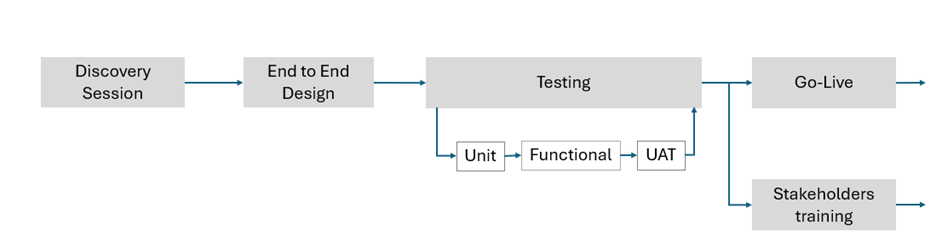
Fig.1. End to End TMS System Implementation flow
Discovery session: Once the process and data mapping of the As-Is system was complete, the stakeholders were brought to the headquarters for a Discovery session and reviewed the entire flow, gathering feedback on the opportunities, and improvements. Stakeholders were also educated on the constraints with the suppliers, carriers and their own operations, which could potentially limit the performance of TMS vendor, thereby setting expectations with the internal stakeholders.
End-to-End Solution design: For the next 4 months, the project team worked closely with TMS vendor to review every single detail on the existing EDI mapping and opportunities on the data and processes. A breakout session was held for each opportunity, bringing just the required stakeholders for the discussion and reaching the decision point. The project team moved forward with the status quo process for few opportunities, for which conclusion could not be reached, and agreed to revisit later after the implementation.
Unit testing and integration testing were successfully wrapped up, testing the functionality of individual units and combined modules respectively. The internal stakeholders were brought back for the User Acceptance Testing (UAT) and prepped the team ahead on all the testing scenarios prior to the onsite UAT.
The UAT was led with the objective of explaining the outcome of every single scenario and what it meant for business. UAT was successful because it had a great turnout from the factories, and a cross-functional team and all the planned scenarios were completed. Only a few scenarios needed retesting as it did not meet the expected results, which were completed in a few weeks and UAT was signed and approved by stakeholders.
Stakeholders training: Once the UAT was wrapped up, the focus shifted to stakeholders training, i.e., suppliers, internal users and carriers.
Change management is a critical element in all transformation projects and most of the time, the transformation project does not generate the expected ROI due to the lower adoption. With this implementation, our priority is to ensure that stakeholders adopt this TMS system well. Project team spent significant time on building the training module to go over the system and process changes with all stakeholders for better adoption.
TMS vendor hosted multiple training sessions bringing all the stakeholders and hosted individual training sessions for critical stakeholders and on requirement basis. A similar approach was adopted for internal users as well as carrier training. In addition to that, Newsletters were published to educate the users on new processes and their implications.
Project Go-Live: With the completion of UAT, the final phase was kick started in getting the systems ready to deploy the objects in production environment whereas UAT was performed in test environment. Go-Live was conducted successfully with 2 suppliers. The plan was to transition all 450+ suppliers into batches and wrapped up in 4 months’ time frame as expected. Project team and the TMS vendor were engaged continuously during the transition time to remedy any potential issue that may affect the shipments move.
Challenges Ahead
Even the system Implementation is done right, goal is only partially complete. The rest depends on how well the stakeholders are complying with the processes, i.e., suppliers, carriers, and internal users. Cost optimization and efficiency are achieved only when the stakeholders are process compliant.
Once the project Implementation is complete, dedicated resources will be released from the project. Continued collaboration with stakeholders is a must to address any new opportunity to leverage the Transportation Management System (TMS) fully otherwise, we will fall into the trap of starting over.


Leave a Reply